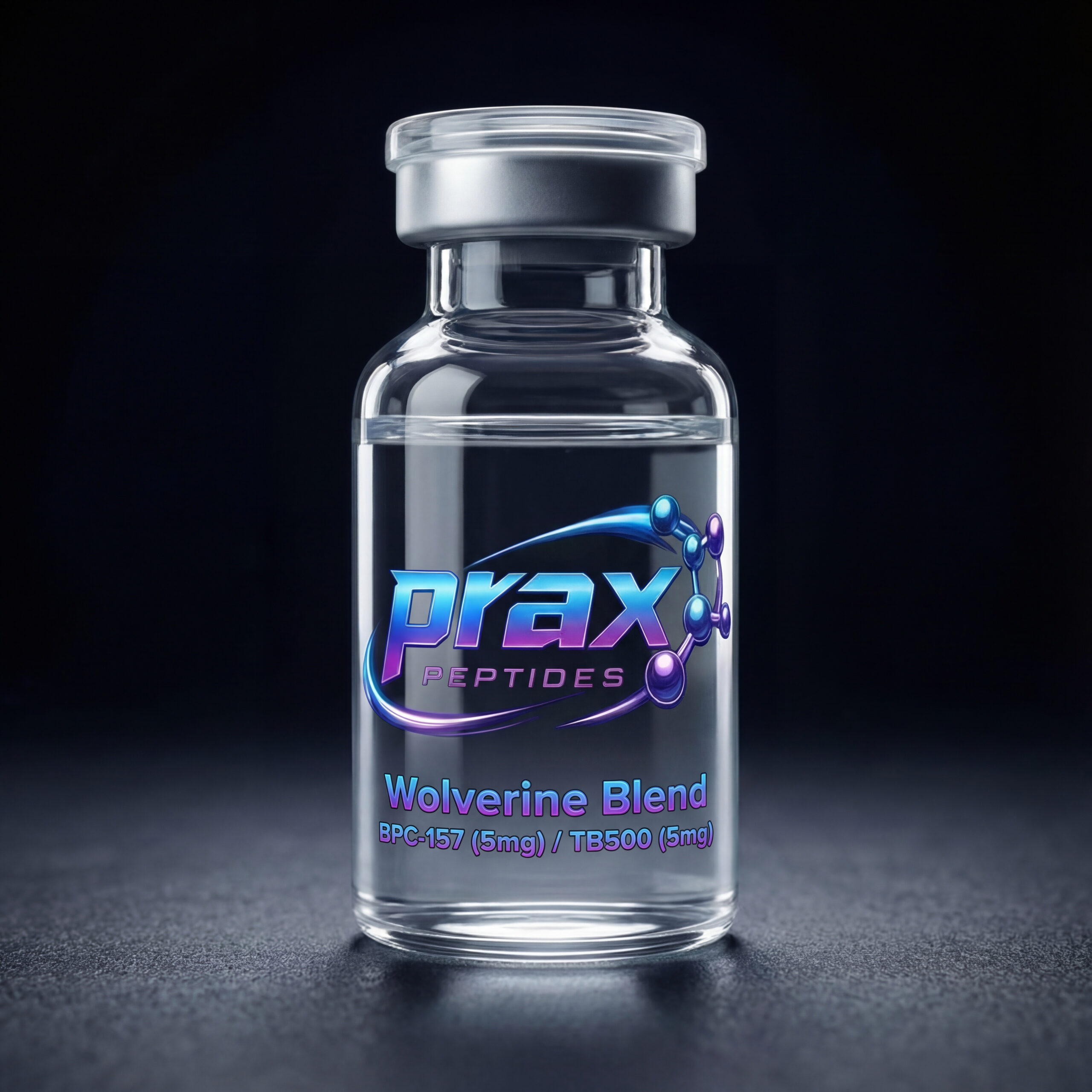
Wolverine Blend (10MG)
Vial
- LC-526 Metabolic Complex
- Epitalon 10MG
- SSJ-9 Amino Matrix
- Acetic Acid Solution
- Survodutide 10MG
- SELANK
- Mazdutide 10MG
- L-Glutathione 1500MG
- HCG 10000iu
- Cerebrolysin 60MG
- BAC Water 30ML
- GLOW 70MG
- KLOW 80 – GHK-Cu (50mg) / KPV (10mg) / BPC-157 (10mg) / TB500 (10mg)
- Tesamorelin (10MG)
- NAD+
- Reta GLP-3R
- BPC-157 (10MG)
- Cagrilintide Tre
- FOXO4-DRI (10MG)
- Testagen (20MG)
- SS-31 (10MG)
- Kisspeptin-10 (10MG)
- Thymalin (10MG)
- GHK-Cu (100MG)
- DSIP (5MG)
- Wolverine Blend (10MG)
- BAC Water (3ML)
- Ipamorelin (10MG)
- TB-500 (10MG)
- BAC Water (10ML)
- AOD-9604 (5MG)
- Ipamorelin / CJC-1295 No Dac 10mg
- MOTS-C (10MG)
- CJC-1295 (10MG)
- PT-141 (10MG)
- Tirz GLP-2 (10MG)
Wolverine Stack Peptides is commonly used for a peptide combination the BPC-157 and TB-500, well-studied research peptides examined for their involvement in cellular repair processes, angiogenesis, and tissue remodeling pathways. BPC-157 is a 15-amino-acid peptide fragment derived from gastric proteins and is associated with nitric oxide modulation and growth factor signaling in experimental models. TB-500, a synthetic fragment of Thymosin Beta-4, is known for its role in actin regulation and cytoskeletal organization. In combination, these peptides are utilized in preclinical research exploring regenerative biology, wound-related mechanisms, and peptide-driven cellular response pathways.
Research suggests that BPC-157 and TB-500 may exhibit complementary roles within wound repair biology when evaluated in experimental models. While both peptides have been explored for their involvement in inflammatory modulation and tissue repair processes, available evidence indicates that they may act through distinct biochemical and cellular pathways rather than redundant mechanisms. This divergence provides a plausible scientific rationale for investigating their combined use in controlled laboratory settings.(1)
From a research-design perspective, the central hypothesis is not that these peptides replicate one another’s actions, but that they may influence separate rate-limiting stages of the repair cascade. These stages may include early cellular recruitment, regulation of fibroblast activity, organization of the extracellular matrix, angiogenic signaling, cytoskeletal dynamics, and the coordinated transition from inflammatory signaling toward tissue remodeling. Evaluating these processes in parallel allows for more precise experimental planning, mechanistic mapping, and outcome measurement within regenerative biology research frameworks.(2,3 )
Biochemical attributes
Bpc-157
BPC-157 is a synthetic pentadecapeptide that has been examined in a range of experimental tissue-injury and repair models. Within tendon-oriented laboratory studies, BPC-157 has been linked to cellular processes associated with structural maintenance and regeneration, including enhanced cell viability, migration, and localized cellular organization within injured tissue matrices. Experimental findings suggest that the peptide may influence fibroblast-related activity, supporting extracellular matrix interactions and cellular outgrowth during tissue remodeling phases.
Additional preclinical investigations indicate that BPC-157 interacts with signaling pathways involved in angiogenic balance, nitric oxide modulation, and cytoprotective responses, all of which are relevant to connective tissue research frameworks. These properties have positioned BPC-157 as a frequently studied compound in regenerative biology models exploring tendon integrity, cellular adaptation to mechanical stress, and peptide-mediated responses in controlled laboratory environments rather than as a therapeutic intervention.
TB-500
TB-500 is commonly examined as a synthetic analogue derived from thymosin beta-4, a peptide extensively explored in experimental models of tissue adaptation and cellular signaling. Within the scientific literature, thymosin beta-4 is frequently associated with regulation of intracellular actin dynamics, a process essential for cell motility, structural integrity, and coordinated migration during tissue turnover. These properties have positioned TB-500 as a molecule of interest in studies evaluating coordinated cellular movement and spatial organization within injured or remodeling tissues.
Beyond cytoskeletal regulation, experimental data suggest that thymosin beta-4–related peptides may influence endothelial cell behavior and microvascular patterning, contributing to angiogenic signaling in laboratory models. Additional investigations have explored its involvement in modulating extracellular matrix interactions and fibroblast-associated pathways, particularly in contexts where controlled tissue remodeling is being evaluated. In fibrosis-focused research, thymosin beta-4 has been discussed as a potential upstream regulator of signaling cascades linked to matrix deposition and tissue architecture reorganization, making TB-500 a relevant subject in mechanistic studies of regenerative biology and cellular repair systems.