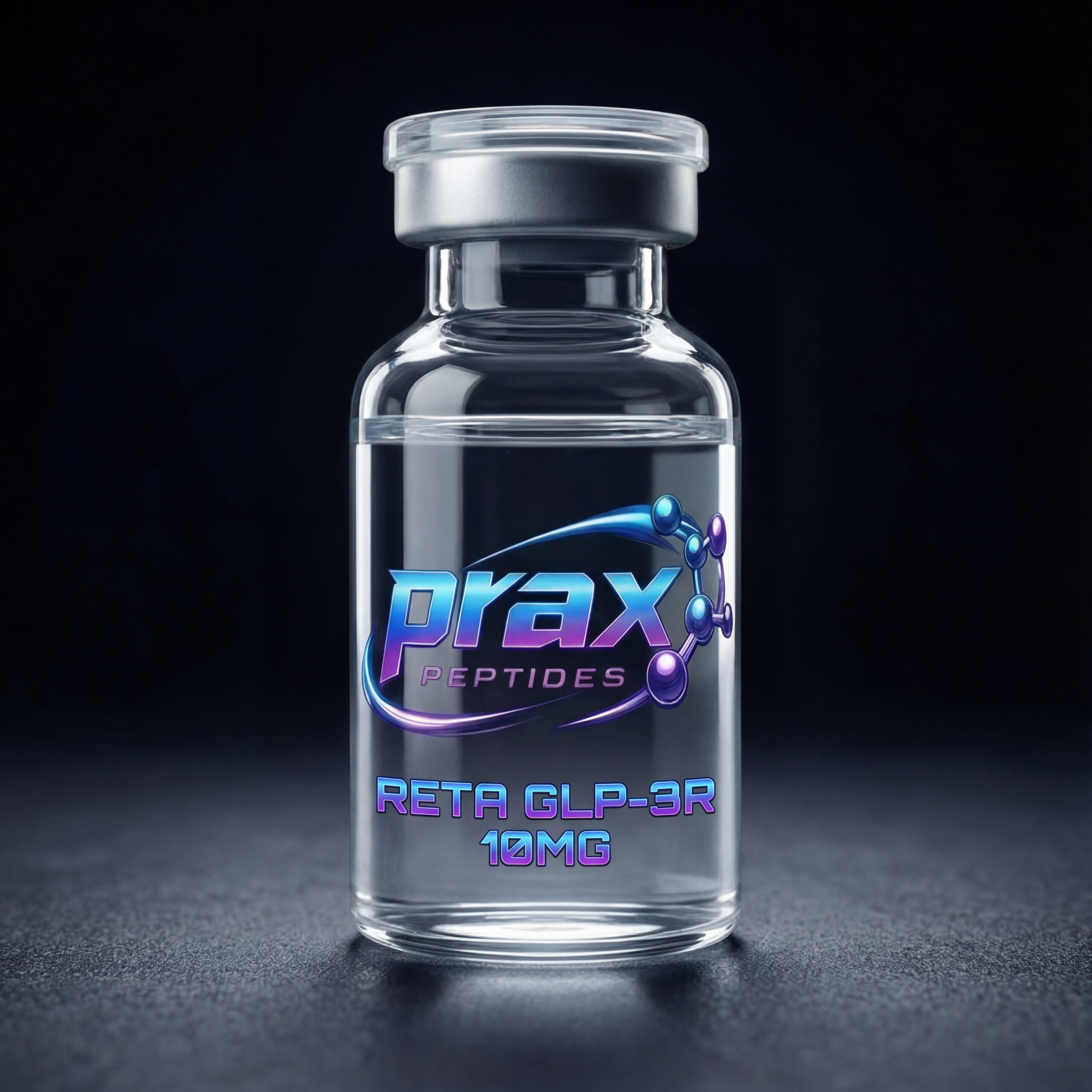
What is Reta GLP-3 (Retatrutide)?
Reta GLP-3 (retatrutide, research code LY-3437943) is a synthetic, single-molecule triple incretin receptor agonist engineered to activate the GLP-1, GIP, and glucagon receptors simultaneously. In published preclinical and early clinical research it has been studied for its effects on metabolic regulation, appetite signaling, and energy expenditure. Each vial is third-party verified at 99%+ HPLC purity and lot-tracked with a certificate of analysis. Supplied strictly for in-vitro and laboratory research use only — not for human or veterinary use.
Introduction
Retatrutide belongs to the same investigational family as single- and dual-incretin agonists such as semaglutide (GLP-1) and tirzepatide (GLP-1/GIP), but extends the approach by adding glucagon-receptor activity. Researchers study this triple-agonist design for its potential to influence appetite, insulin secretion, and lipid metabolism in parallel. Retatrutide remains an investigational compound that has advanced into clinical trials; it is not an approved therapeutic.
mechanism of action — Mechanism of Action
Retatrutide’s activity is attributed to balanced agonism across three metabolic receptors. Mechanisms reported in the literature include:
GLP-1 receptor activation
- Stimulates glucose-dependent insulin release
- Supports appetite regulation and satiety signaling
- Slows gastric emptying
GIP receptor activation
- Augments insulin secretion
- Associated with β-cell support and improved nutrient handling
Glucagon receptor activation
- Linked to increased energy expenditure
- Promotes hepatic lipid mobilization and oxidation
Clinical Research Evidence
In a published Phase 2 randomized trial, retatrutide produced dose-dependent reductions in body weight, with the highest dose associated with up to approximately 24% mean body-weight reduction at 48 weeks, alongside improvements in cardiometabolic markers. These results — which exceeded those reported for several existing single- and dual-agonist agents — supported its advancement into ongoing Phase 3 evaluation. Data are provided here for scientific reference only.
Chemical Structure & Specifications
- Synonyms: Retatrutide, LY-3437943
- CAS No.: 2381089-83-2
- Molecular formula (free base): C221H342N46O68
- Molecular weight: ≈ 4731.3 g/mol
- Class: ~39-residue synthetic peptide; GLP-1R / GIPR / GCGR triple agonist
- Purity: 99%+ (HPLC, third-party verified); lot-tracked with COA
- Form: Lyophilized powder — available in 5 mg, 10 mg, 30 mg, and 60 mg vials
Areas of Research Interest
Retatrutide is investigated in the scientific literature in connection with obesity, type 2 diabetes, and metabolic dysfunction-associated steatotic liver disease (MASLD). Its triple-hormone mechanism is studied for how it may suppress appetite, support glucose-dependent insulin secretion, and increase energy expenditure. All such work is preclinical or clinical investigation; this product is not a treatment and is not for human or veterinary use.
Bulk Research Pricing
Volume discounts are applied automatically in your cart based on the number of vials ordered:
| Quantity (vials) | Your discount |
|---|---|
| 1 – 2 | — |
| 3 – 4 | 3% off |
| 5 – 9 | 5% off |
| 10+ | 10% off |
✅ on US orders over $179. Ships in 24–48 business hours; we also ship on weekends.
Storage & Handling
Store lyophilized vials cold and protected from light; reconstitute with bacteriostatic water for laboratory use. Handle per standard laboratory safety practices.
Research Use Only. This product is intended exclusively for in-vitro laboratory and research purposes. It is not a drug, food, or cosmetic and is not intended to diagnose, treat, cure, or prevent any disease. Not for human or veterinary use.
Order now to advance your research. For bulk orders and academic pricing, contact our team.