
Semax Peptide: The History of Russia’s Most Studied Nootropic and Neuroprotective Compound
Search
Recent Post
Share
- Uncategorized
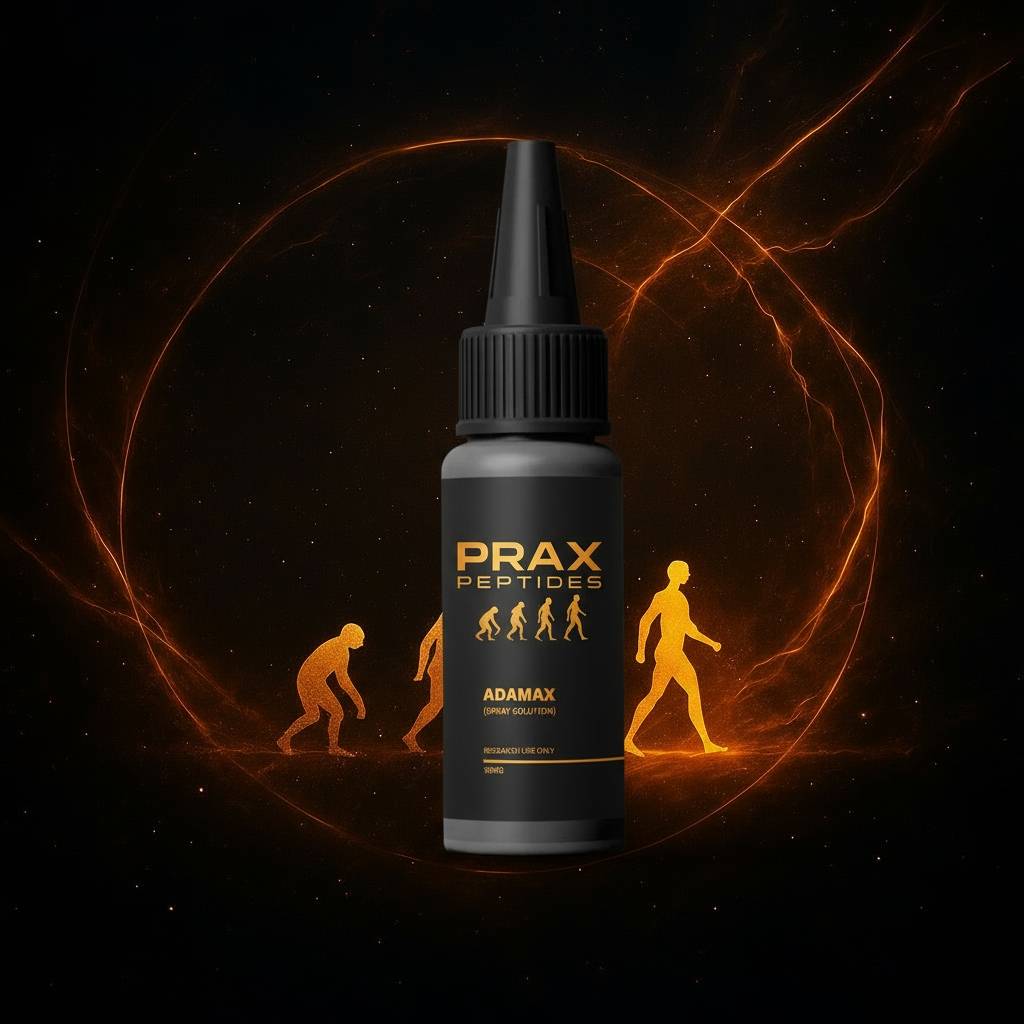
For Research Use Only. This guide is provided strictly for in-vitro laboratory and educational purposes for qualified researchers. It describes molecular and mechanistic research only, is not medical advice, and refers to no product intended for human or veterinary use, diagnosis, or treatment. Not evaluated by the FDA.
Semax is a synthetic neuropeptide of Russian origin, widely used as a reference probe of neurotrophic signaling. This expanded guide covers its structure, mechanism, and research history.
Molecular identity & structure
Semax is a synthetic heptapeptide (Met-Glu-His-Phe-Pro-Gly-Pro) derived from the ACTH(4-10) fragment, with a C-terminal Pro-Gly-Pro extension that increases enzymatic stability. It carries no corticotropic hormonal activity, distinguishing it from full ACTH.
Free Tool
Peptide Reconstitution Calculator
Convert vial strength, water volume, and reference quantity into precise syringe units. Works for BPC-157, TB-500, GHK-Cu, and all research peptides.
Try the Calculator →Mechanism of action (in vitro)
In neuronal model systems Semax is studied for upregulation of brain-derived neurotrophic factor (BDNF) and its receptor TrkB, engaging downstream CREB-dependent signaling associated with neuronal survival and plasticity. It is additionally examined for modulation of the monoamine and melanocortin systems and for inhibition of enkephalin-degrading enzymes, which prolongs endogenous regulatory-peptide signaling.
Research history
Semax was developed in the Soviet/Russian research context as part of a program investigating short ACTH-derived neuropeptides that retain neurotropic signaling without hormonal activity. It remains a common tool for BDNF/TrkB pathway research.
Preclinical research landscape
Semax is used in BDNF/TrkB reporter systems, neuronal-culture assays and preclinical neuroscience models. Findings characterize neurotrophic signaling in these systems and are not indicators of any human outcome.
Related compounds
Compare with the neuropeptides Selank, Cerebrolysin and Adamax; see the neuropeptide guide.
Laboratory handling & reconstitution
Lyophilized peptide is solubilized by adding bacteriostatic or sterile water slowly down the vial wall and swirling gently — never shaking. Lyophilized material is stored at −20 °C protected from light; reconstituted material is held at 2–8 °C for short-term laboratory use, with single-use aliquots to limit freeze–thaw degradation. See the reconstitution calculator for solvent-to-concentration reference.
Analytical characterization
Research-grade reference material should carry a batch-specific Certificate of Analysis: reverse-phase HPLC for chromatographic purity (commonly ≥98%) with a chromatogram, mass spectrometry confirming molecular identity, and the name of the independent testing laboratory. Batch records appear on our Lab Reports page.
Research applications
Uses include BDNF/TrkB and CREB signaling assays, neuronal-survival and plasticity studies, and enkephalinase-inhibition research.
Research Use Only — not for human or veterinary use, diagnosis, or treatment. Purchases are restricted to qualified researchers.