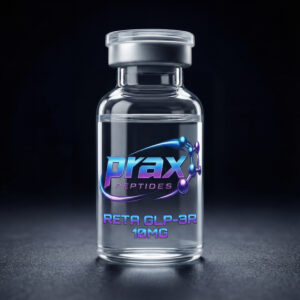
What Is the Quintuple Agonist (GLP-5)?
In April 2026, a team of researchers led by Liskiewicz, Novikoff, and Khalil published a landmark study in Nature describing a single molecule that activates five distinct biological receptors simultaneously. Informally dubbed “GLP-5” by the research community, this quintuple agonist targets GLP-1R, GIPR, PPARα, PPARγ, and PPARδ — making it the most multi-targeted obesity and metabolic research compound ever reported in a peer-reviewed journal.
The molecule is not literally named “GLP-5.” The nickname emerged because it engages five receptor pathways, building on the naming convention established by dual agonists (GLP-1/GIP, sometimes called “GLP-2” informally) and triple agonists like retatrutide (GLP-1/GIP/glucagon, sometimes called “GLP-3”). The actual compound is a chemical conjugate of a DPP4-protected incretin co-agonist backbone (MAR709) and lanifibranor, a triple PPAR agonist already in clinical trials for metabolic liver disease.
This article provides a comprehensive, research-focused breakdown of the quintuple agonist — what it is, mechanism of action, what the preclinical data shows, and how it compares to existing compounds like semaglutide, tirzepatide, and retatrutide.
Free Tool
Peptide Reconstitution Calculator
Convert vial strength, water volume, and reference dose into precise syringe units. Works for BPC-157, TB-500, GHK-Cu, and all research peptides.
Try the Calculator →The Five Receptors: Why Targeting All Five Matters for Metabolic Research
To understand why a five receptor agonist for obesity is generating so much attention in the research world, it helps to understand what each receptor does individually and why combining them into one molecule could produce synergistic effects that no single-target drug can achieve.
GLP-1R (Glucagon-Like Peptide-1 Receptor)
GLP-1R activation is the mechanism behind semaglutide (Ozempic/Wegovy) and liraglutide (Saxenda). In preclinical models, GLP-1R agonism reduces food intake, slows gastric emptying, enhances insulin secretion, and promotes satiety signaling in the brain. It is the most validated single target in metabolic research in current pharmaceutical research.
GIPR (Glucose-Dependent Insulinotropic Polypeptide Receptor)
GIPR is the second receptor targeted by tirzepatide (Mounjaro/Zepbound). GIP receptor agonism appears to enhance the weight-lowering and glucose-regulating effects of GLP-1R activation. Research suggests GIPR agonism may also improve lipid metabolism and reduce inflammation in adipose tissue, though its precise contribution to weight loss is still being investigated.
PPARα (Peroxisome Proliferator-Activated Receptor Alpha)
PPARα is primarily expressed in the liver and plays a central role in fatty acid oxidation and triglyceride metabolism. Activation of PPARα enhances the breakdown of fatty acids for energy, reduces circulating triglycerides, and has been studied extensively in the context of dyslipidemia and non-alcoholic fatty liver disease (NAFLD). Fibrate drugs like fenofibrate work primarily through PPARα activation.
PPARγ (Peroxisome Proliferator-Activated Receptor Gamma)
PPARγ is the target of thiazolidinediones (TZDs) like pioglitazone. It is a master regulator of adipocyte differentiation and insulin sensitivity. PPARγ activation improves glucose uptake in peripheral tissues and reduces insulin resistance — a key driver of type 2 diabetes and metabolic syndrome. However, standalone PPARγ agonists have been associated with reported adverse events in literature including fluid retention, weight gain, and potential cardiovascular concerns, which is why targeted delivery matters enormously.
PPARδ (Peroxisome Proliferator-Activated Receptor Delta)
PPARδ is expressed broadly across tissues including skeletal muscle, the heart, and the gut. Activation of PPARδ enhances fatty acid oxidation in muscle, improves endurance-related metabolic pathways, and has anti-inflammatory effects. PPARδ has been a target of interest in exercise mimetic research — compounds that activate some of the metabolic pathways normally triggered by physical activity.
The Synergy Argument
The quintuple agonist hypothesis is that combining incretin receptor agonism (GLP-1R + GIPR for appetite suppression, glucose control, and weight loss) with pan-PPAR agonism (PPARα + PPARγ + PPARδ for insulin sensitization, lipid metabolism, anti-inflammation, and hepatic fat reduction) in a single molecule could address obesity and its metabolic complications more comprehensively than any existing approach. The Nature 2026 data suggests this hypothesis has strong preclinical support.
How the Quintuple Agonist Was Built: The Conjugation Strategy
One of the most innovative aspects of this research is not just what the molecule targets, but how it was engineered. The researchers did not simply co-administer an incretin agonist alongside a PPAR agonist. Instead, they chemically conjugated lanifibranor directly onto the incretin co-agonist backbone, creating a single bifunctional molecule.
This conjugation strategy solves a critical problem that has plagued PPAR agonist research for decades. Standalone PPAR agonists — particularly PPARγ agonists — require relatively high systemic doses to achieve therapeutic effects, and those high doses produce reported adverse events in literature like fluid retention, edema, and potential cardiac concerns. By attaching lanifibranor to an incretin peptide backbone, the researchers achieved targeted delivery of the PPAR agonist specifically to tissues that express GLP-1R and GIPR — primarily the pancreas, gut, brain, and adipose tissue.
The result is remarkable: in the preclinical models described in the Nature paper, the conjugated lanifibranor was effective at approximately 1/6,900th of the dose required when lanifibranor was administered as a standalone compound. This massive dose reduction means the PPAR-related side effect profile could be dramatically different from what has been observed with conventional PPAR agonists.
Preclinical Results: What the Data Actually Shows
The Nature 2026 study (DOI: 10.1038/s41586-026-10427-5) reports extensive preclinical data in mouse models of obesity and metabolic dysfunction. Here are the key findings that have generated excitement in the next generation weight loss drug 2026 research community.
Weight Loss Outcomes
The quintuple agonist produced significantly greater weight reduction than any comparator tested, including semaglutide alone and GLP-1/GIP dual agonism alone. At a dose of 50 nmol/kg administered over 14 days, the quintuple agonist produced weight loss that was 2.63-fold greater than GLP-1-lanifibranor administered separately. The weight loss was driven by reduced food intake and appeared to involve enhanced energy expenditure pathways, though the precise mechanisms are still being characterized.
Glucose and Insulin Sensitivity
The compound demonstrated potent glucose-lowering effects and significantly improved insulin sensitivity in diet-induced obese mice. Hepatic gluconeogenesis — the liver’s production of new glucose, which is elevated in insulin-resistant states — was markedly reduced. These metabolic improvements exceeded those seen with incretin agonism alone, consistent with the added contribution of PPAR-mediated insulin sensitization.
Liver and Adipose Tissue Effects
Perhaps the most striking data came from transcriptomic analysis. The quintuple agonist altered the expression of more than 5,400 genes in liver tissue and more than 8,000 genes in adipose tissue. This extraordinary breadth of gene expression changes suggests the compound is fundamentally reprogramming metabolic pathways in these tissues — far beyond what single-target or even dual-target agonists achieve. The changes included upregulation of fatty acid oxidation pathways, downregulation of inflammatory cascades, and shifts in adipokine expression profiles.
Safety Signals in Preclinical Models
The researchers specifically looked for the reported adverse events in literature that have historically limited PPAR agonist development, including fluid retention, renal impairment, and tissue pathology. In the preclinical models reported, no significant signals of these adverse effects were observed. The authors attribute this to the targeted delivery mechanism — because the PPAR agonist component is delivered at such dramatically reduced systemic doses via the incretin conjugation, the off-target effects appear to be minimized. However, it is essential to note that preclinical safety in mouse models does not guarantee the same safety profile in other species or in humans.
Quintuple Agonist vs Semaglutide: How Do They Compare?
Semaglutide (the active compound in Ozempic and Wegovy) is currently the most widely recognized GLP-1R agonist in both clinical use and research settings. It targets a single receptor — GLP-1R — and achieves its effects primarily through appetite suppression, delayed gastric emptying, and enhanced insulin secretion.
The quintuple agonist vs semaglutide comparison from the Nature 2026 study shows several key differences in preclinical models. The quintuple agonist outperformed semaglutide in total body weight reduction over the study period. Beyond weight loss, the quintuple agonist demonstrated broader metabolic improvements — better insulin sensitization, greater hepatic fat reduction, and more extensive anti-inflammatory gene expression changes — that semaglutide’s single-receptor mechanism cannot achieve. Semaglutide does not activate PPAR pathways, so it does not directly address insulin resistance at the receptor level or enhance fatty acid oxidation in muscle tissue the way a PPAR agonist can.
That said, semaglutide has something the quintuple agonist does not: extensive human clinical trial data, regulatory approval, and years of real-world safety monitoring. The quintuple agonist is a preclinical compound with zero human data at this point.
Quintuple Agonist vs Retatrutide: Triple vs Five Targets
Retatrutide is the most advanced triple agonist in clinical development, targeting GLP-1R, GIPR, and the glucagon receptor (GCGR). In phase 2 clinical trials, retatrutide produced unprecedented weight loss — up to 24% body weight reduction over 48 weeks — making it one of the most potent metabolic research compounds ever tested in humans.
The quintuple agonist and retatrutide share GLP-1R and GIPR agonism, but differ in their third-plus targets. Retatrutide adds glucagon receptor activation, which enhances energy expenditure, hepatic fat oxidation, and contributes to its powerful weight loss effects. The quintuple agonist instead adds triple PPAR agonism (PPARα/γ/δ), which provides insulin sensitization, anti-inflammatory effects, and broad metabolic reprogramming.
In theoretical terms, the ideal next-generation compound might combine both approaches — potentially surpassing retatrutide by adding PPAR activation on top of the triple incretin/glucagon mechanism. Whether such a molecule is chemically feasible and pharmacologically safe remains to be seen, but the quintuple agonist represents a proof of concept that multi-receptor conjugation is a viable strategy.
Quintuple Agonist vs Tirzepatide: Dual vs Five Targets
Tirzepatide (Mounjaro/Zepbound) is a dual GLP-1R/GIPR agonist that has shown remarkable clinical efficacy, with phase 3 trials demonstrating up to 22.5% body weight reduction. The quintuple agonist builds on the same GLP-1R/GIPR foundation but adds the entire PPAR axis.
The key theoretical advantage of the quintuple agonist over tirzepatide is the addition of direct insulin sensitization and anti-inflammatory pathways through PPAR activation. Tirzepatide improves insulin sensitivity indirectly through weight loss and GIP-mediated effects, but it does not directly activate the nuclear receptors that control fatty acid metabolism, adipocyte function, and hepatic lipid handling. For research into metabolic syndrome, NAFLD/NASH, and the inflammatory components of obesity, the quintuple agonist’s broader mechanism is of particular interest.
The Lanifibranor Connection: Why This PPAR Agonist Was Chosen
Lanifibranor is not a new compound. It is a pan-PPAR agonist (activating PPARα, PPARγ, and PPARδ simultaneously) developed by Inventiva Pharma that has been in clinical trials for metabolic-associated steatohepatitis (MASH, formerly NASH). In its own clinical development, lanifibranor has shown promise for reducing liver inflammation and fibrosis in patients with fatty liver disease.
The researchers chose lanifibranor specifically because of its balanced pan-PPAR activity. Unlike selective PPAR agonists (which target only one subtype), lanifibranor’s simultaneous activation of all three PPAR subtypes provides complementary metabolic effects — PPARα for hepatic lipid oxidation, PPARγ for insulin sensitization, and PPARδ for muscle fatty acid metabolism and anti-inflammatory signaling. The lanifibranor GLP-1 conjugate approach represents a novel drug design strategy: take a known, well-characterized compound with broad metabolic benefits but dose-limiting side effects, and deliver it at a fraction of its usual dose by attaching it to a targeting peptide.
What GLP-5 Means for the Future of Obesity Research
The quintuple agonist is not available for clinical use and has not entered human trials. It is a preclinical research compound that demonstrates a powerful proof of concept. However, its implications for the trajectory of obesity and metabolic disease research are significant.
The Multi-Target Paradigm Is Accelerating
The progression from single-target (semaglutide), to dual-target (tirzepatide), to triple-target (retatrutide), and now to five-target agonism (the quintuple agonist) represents a clear trend in metabolic research: more targets, delivered more precisely, at lower individual doses. Each generation has shown incrementally greater efficacy in preclinical and/or clinical models. The quintuple agonist extends this logic to its current extreme.
Conjugation Chemistry as a Platform
The chemical conjugation approach used to create the quintuple agonist is not limited to lanifibranor. In principle, the same incretin peptide backbone could be used to deliver other small-molecule drugs to metabolically active tissues at dramatically reduced doses. This opens a broad new design space for researchers interested in targeted delivery of compounds that have historically been limited by systemic side effects.
Implications for NAFLD/NASH Research
The combination of incretin-mediated weight loss with PPAR-mediated liver protection is particularly relevant for non-alcoholic fatty liver disease (NAFLD) and its more severe form, non-alcoholic steatohepatitis (NASH/MASH). Current research suggests that weight loss alone improves NAFLD outcomes, but direct PPAR activation may provide additional hepatoprotective benefits that go beyond what weight loss achieves. The quintuple agonist could be an especially powerful research tool for studying this combination.
Key Limitations and What We Do Not Yet Know
It is critical to maintain scientific rigor when discussing a compound that has only been tested in preclinical models. Here are the major unknowns and limitations.
No human data exists. All results described in the Nature 2026 paper are from mouse models. The history of obesity research is filled with compounds that showed extraordinary results in mice but failed to translate to humans, or produced unacceptable side effects in clinical trials.
Long-term safety is unknown. The preclinical studies were conducted over relatively short time frames. Chronic PPAR activation — even at reduced doses — could potentially produce effects that only emerge with prolonged exposure. Concerns about PPARγ-related cardiac effects, bone density changes, and fluid retention cannot be fully resolved without long-term studies in multiple species.
Manufacturing complexity. A bifunctional peptide-small molecule conjugate is significantly more complex to manufacture than either component alone. Scale-up, stability, and quality control challenges could present obstacles to clinical development.
Regulatory pathway is unclear. A five-receptor agonist represents a novel pharmacological class with no direct precedent. Regulatory agencies would likely require extensive characterization of each receptor’s contribution to efficacy and safety, which could extend the development timeline considerably.
The “GLP-5” name is informal. There is no officially designated compound called GLP-5. The nickname is used colloquially in research discussions and should not be confused with an actual GLP-5 peptide or receptor. Researchers should use the full descriptor — GLP-1/GIP/PPARα/γ/δ quintuple agonist — in formal scientific communications.
How Current Research Peptides Relate to the Quintuple Agonist
While the quintuple agonist itself is not commercially available, several of the individual receptor targets it engages are already the subject of active research using available compounds. Understanding these individual pathways can help researchers appreciate the broader context of multi-receptor agonism.
GLP-1R and GIPR agonism — the incretin component of the quintuple agonist — is the same mechanism employed by tirzepatide and retatrutide. Researchers studying incretin-mediated metabolic effects can explore this pathway with available GLP-1R/GIPR agonist research compounds.
Growth hormone secretagogue research intersects with metabolic research through compounds like tesamorelin, which has been studied in the context of visceral fat reduction and lipodystrophy — conditions where PPAR pathways are also implicated.
Mitochondrial-targeted peptides like MOTS-c represent another approach to metabolic regulation, operating through AMPK activation and exercise-mimetic pathways that complement — though do not overlap with — the PPAR mechanisms in the quintuple agonist.
Browse research-grade Retatrutide, Tesamorelin, and MOTS-c in our full research catalog.
Frequently Asked Questions About the Quintuple Agonist
Is GLP-5 available for purchase?
No. The quintuple agonist described in the 2026 Nature publication is a preclinical research compound that has not been commercialized. The “GLP-5” name is an informal nickname used in research discussions, not an approved drug or commercially available peptide.
When will the quintuple agonist enter human clinical trials?
No timeline for human clinical trials has been announced. The compound would need to complete additional preclinical characterization, toxicology studies, and IND-enabling work before a first-in-human trial could begin. This process typically takes several years.
Is the quintuple agonist better than Ozempic?
In preclinical mouse models, the quintuple agonist produced greater weight loss and broader metabolic improvements than semaglutide (the active ingredient in Ozempic). However, preclinical superiority in mice does not guarantee the same results in humans. Semaglutide has extensive human clinical data and regulatory approval; the quintuple agonist has neither.
What is the difference between the quintuple agonist and retatrutide?
Retatrutide is a triple agonist targeting GLP-1R, GIPR, and the glucagon receptor. The quintuple agonist targets GLP-1R, GIPR, PPARα, PPARγ, and PPARδ. They share two targets (GLP-1R and GIPR) but differ in the additional pathways they engage — glucagon for retatrutide, triple PPAR for the quintuple agonist.
Could there be a sextuple or septuple agonist next?
In theory, yes. The conjugation platform demonstrated in the Nature study could potentially be extended to incorporate additional targeting mechanisms. However, each additional receptor target adds pharmacological complexity and potential for unforeseen interactions. The practical limit of multi-receptor agonism will likely be determined by safety rather than chemistry.
Summary: The Quintuple Agonist in Context
The GLP-1/GIP/PPARα/γ/δ quintuple agonist published in Nature in April 2026 represents a significant advance in the science of multi-receptor metabolic agonism. By conjugating the pan-PPAR agonist lanifibranor onto a GLP-1/GIP dual incretin backbone, researchers achieved five-receptor activation in a single molecule with dramatically reduced PPAR dosing requirements and no observed safety signals in preclinical models.
The compound outperformed semaglutide, surpassed GLP-1/GIP dual agonism, and demonstrated an unprecedented breadth of gene expression changes in liver and adipose tissue. It represents the logical next step in a trajectory from single-target (semaglutide) to dual-target (tirzepatide) to triple-target (retatrutide) to quintuple-target metabolic agonism.
For researchers studying obesity, type 2 diabetes, NAFLD/NASH, metabolic syndrome, or the intersection of incretin biology and nuclear receptor pharmacology, the quintuple agonist opens new avenues of investigation. While human clinical data remains years away, the preclinical foundation is compelling and the conjugation platform may prove applicable far beyond this single molecule.
All compounds discussed in this article are intended strictly for in-vitro research and laboratory use only. They are not intended for human consumption, veterinary use, or any clinical application. Researchers are responsible for ensuring compliance with all applicable regulations in their jurisdiction.
Featured Research Peptides
Lab-tested. 99%+ purity. 30-day quality guarantee.