
Semax Peptide: The History of Russia’s Most Studied Nootropic and Neuroprotective Compound
Search
Recent Post
Share
- Uncategorized
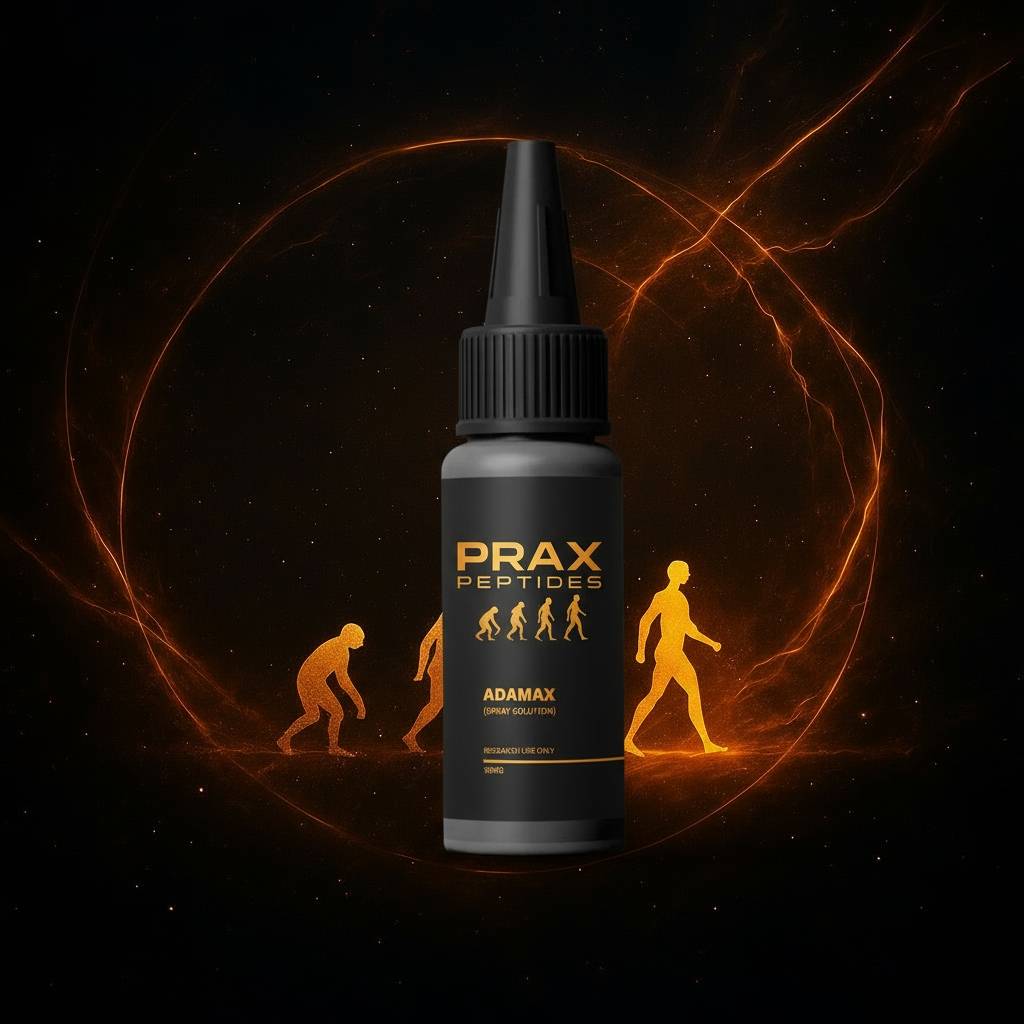
The Semax peptide has one of the most extensive research histories of any nootropic compound, spanning decades of Russian academic investigation. This article traces the history of Semax neuroprotective research from its origins at the Russian Academy of Sciences to its current status as one of the most studied cognitive enhancement peptides worldwide.
Few peptides have a history as rich — or as well-documented — as Semax. Developed in the Soviet Union during the Cold War era, Semax emerged from one of Russia’s most prestigious research institutions and went on to become an approved medication used in hospitals across the country. Today, it remains one of the most extensively studied nootropic peptides in the world, with decades of published research behind it.
This guide covers the full history of the Semax peptide, from its origins in Soviet-era neuroscience to its current status as a research compound attracting global scientific interest. We’ll examine what makes Semax unique among peptides, how N-Acetyl Semax differs from the original formulation, and what the published research actually shows.
Free Tool
Peptide Reconstitution Calculator
Convert vial strength, water volume, and reference quantity into precise syringe units. Works for BPC-157, TB-500, GHK-Cu, and all research peptides.
Try the Calculator →The Origins of Semax: Soviet Peptide Science
The story of Semax begins in the late 1960s and early 1970s, when several laboratories focused on peptide chemistry were established across the Soviet Union. Soviet scientists had recognized that short peptide fragments derived from larger hormones could have powerful biological effects of their own — often quite different from the parent molecule.
One area of particular interest was adrenocorticotropic hormone (ACTH), a 39-amino-acid peptide produced by the pituitary gland. Researchers discovered that a small fragment of ACTH — specifically the sequence at positions 4 through 10 (ACTH 4-10) — appeared to have significant effects on learning, memory, and attention in animal models, without the hormonal reported adverse events in literature of full-length ACTH.
This discovery launched a focused research program at the Institute of Molecular Genetics of the Russian Academy of Sciences in Moscow. Under the direction of Academician Nikolai Myasoedov and Professor Igor Ashmarin of Moscow State University, a team of scientists set out to create a synthetic analog of ACTH(4-10) that would be more stable, more potent, and more practical for therapeutic use than the natural fragment.
1982: Semax Is Synthesized
In 1982, the research team successfully synthesized the heptapeptide that would become known as Semax. Its amino acid sequence — Met-Glu-His-Phe-Pro-Gly-Pro — was a modified version of the ACTH(4-10) fragment with a stabilized C-terminal tripeptide (Pro-Gly-Pro) added to resist enzymatic degradation. This structural modification was a critical innovation: natural ACTH fragments break down rapidly in the body, but the addition of the Pro-Gly-Pro tail gave Semax significantly longer biological activity.
The result was a synthetic peptide that retained the cognitive-enhancing properties of ACTH(4-10) while eliminating the hormonal effects associated with full-length ACTH. Semax did not affect cortisol levels, adrenal function, or other endocrine pathways — it acted primarily on the central nervous system.
From Laboratory to Approved Medication
Following its synthesis, Semax underwent extensive preclinical and clinical testing throughout the 1980s and 1990s. The research generated a substantial body of published literature — hundreds of studies examining its mechanisms of action, safety profile, and therapeutic potential across multiple conditions.
In 1998, the Russian Ministry of Health granted regulatory approval for Semax as a treatment for stroke and cognitive disorders. This made Semax one of the few peptide-based nootropics to achieve official government approval anywhere in the world. It was approved as a nasal spray formulation at a concentration of 0.1%, administered intranasally for rapid absorption into the central nervous system.
By 2011, Semax had been added to Russia’s List of Vital and Essential Drugs — a government-maintained registry of medications considered critical for the national healthcare system. This designation placed Semax alongside widely used pharmaceuticals and reflected the depth of clinical evidence supporting its use.
Today, Semax is prescribed in Russia and several Commonwealth of Independent States (CIS) countries for a range of neurological and cognitive conditions, including ischemic stroke recovery, transient ischemic attack, memory impairment, cognitive disorders, and optic nerve disease.
How Semax Works: Mechanisms of Action
One of the reasons Semax attracted such sustained research interest is that it appears to work through multiple complementary mechanisms rather than a single pathway. Published research has identified several key mechanisms of action.
BDNF and Neurotrophic Factor Modulation
Perhaps the most significant finding in Semax research is its effect on brain-derived neurotrophic factor (BDNF). Animal studies have demonstrated that Semax rapidly elevates levels of BDNF and its signaling receptor TrkB (tropomyosin receptor kinase B) in the hippocampus — the brain region most closely associated with memory formation and learning. BDNF is often described as “fertilizer for the brain” because it supports the survival of existing neurons and encourages the growth of new neurons and synapses.
Dopaminergic and Serotonergic System Activation
Research has shown that Semax activates both the dopaminergic and serotonergic brain systems. By enhancing the release and turnover of dopamine and serotonin — two neurotransmitters fundamentally involved in motivation, mood, focus, and cognitive function — Semax may support multiple aspects of mental performance simultaneously.
Neuroprotective Effects
Semax has demonstrated significant neuroprotective properties in both in vitro studies and animal models of cerebral ischemia (restricted blood flow to the brain). A genome-wide transcriptional analysis published in BMC Genomics found that Semax affects the expression of genes related to the immune and vascular systems during focal brain ischemia in rats — suggesting it may help protect brain tissue during and after stroke events.
Immunomodulatory Activity
Beyond its cognitive and neuroprotective effects, Semax has also shown immunomodulatory properties in research settings. Studies have examined its potential to modulate immune responses under conditions of social stress, suggesting a connection between its neurological and immune system effects that researchers continue to investigate.
N-Acetyl Semax: The Enhanced Formulation
As research into Semax progressed, scientists developed N-Acetyl Semax — a modified version of the original peptide with an acetyl group attached to the N-terminus. This modification was designed to address one of the practical limitations of the original Semax formulation: enzymatic degradation.
The acetylation of Semax provides several advantages for research applications. Enhanced stability is the primary benefit — the acetyl group protects the peptide from aminopeptidases (enzymes that break down peptides starting from the N-terminus), giving N-Acetyl Semax a longer effective half-life. This improved stability translates to better bioavailability, meaning a greater proportion of the administered peptide reaches its target sites in active form.
The neuroprotective and cognitive benefits attributed to standard Semax are believed to be retained — and potentially amplified — in the N-Acetyl form. For researchers studying Semax’s mechanisms of action, the improved stability of N-Acetyl Semax makes it a more practical and consistent research tool.
Published Research Highlights
The depth of published research on Semax is unusual for a peptide compound. Here are some of the key findings from the scientific literature.
Cognitive function in healthy subjects: A study in healthy patients reported that Semax (at doses of 250–1000 mcg/kg) improved attention and short-term memory, and caused EEG changes similar to those produced by other established neuroprotective compounds.
Stroke recovery: Clinical research in Russia has examined Semax as an adjunctive treatment for ischemic stroke, with results supporting its neuroprotective effects during acute cerebral ischemia and its potential to support recovery.
Alzheimer’s disease models: Recent research published in the journal Pharmaceuticals found that both Semax and its derivatives improved cognitive functions in mice in Alzheimer’s disease models, and that Semax affected copper-induced amyloid-beta aggregation in artificial membrane models.
Gene expression in ischemia: Genome-wide transcriptional analysis revealed that Semax significantly affects the expression of genes involved in immune response, inflammation, and vascular function during brain ischemia — providing molecular-level evidence for its neuroprotective mechanisms.
Semax in the Global Research Landscape
While Semax was developed and approved in Russia, interest in the peptide has expanded well beyond Russian borders. Researchers worldwide now study Semax and its derivatives, and it has become one of the most frequently discussed nootropic peptides in the scientific community.
Several factors drive this global interest. The extensive Russian clinical data provides a foundation that few other research peptides can match. The multiple mechanisms of action — BDNF modulation, neurotransmitter system activation, neuroprotection, and immunomodulation — make Semax relevant to a wide range of neuroscience research questions. And the development of enhanced formulations like N-Acetyl Semax has made the peptide more accessible and practical for laboratory research.
It’s worth noting that while Semax is an approved medication in Russia, it has not received regulatory approval from the FDA in the United States or from equivalent agencies in most Western countries. In the U.S. and many other jurisdictions, Semax and N-Acetyl Semax are available as research peptides for laboratory use.
Why Quality Matters When Sourcing Semax
As with any research peptide, the quality of your Semax directly determines the reliability of your results. Semax’s complex heptapeptide structure means that synthesis quality, purification, and proper handling all significantly affect the final product.
When sourcing N-Acetyl Semax for research, the same quality standards apply as with any peptide purchase: third-party purity testing via HPLC and mass spectrometry, batch-specific Certificates of Analysis, proper lyophilization or formulation, and appropriate cold-chain shipping and storage.
At Prax Peptides, our N-Acetyl Semax (30MG) nasal spray is formulated for research convenience with 99%+ purity verified by independent third-party testing. Every batch ships with a full Certificate of Analysis so you can verify exactly what you’re working with. Like all our products — including BPC-157, TB-500, and our full research peptide catalog — our N-Acetyl Semax meets the quality standards that serious research demands.
This article is for informational and educational purposes only. Research peptides are sold for laboratory research use only and are not intended for human consumption. Always consult applicable regulations in your jurisdiction.
All compounds discussed in this article are intended strictly for in-vitro research and laboratory use only. They are not intended for human consumption, veterinary use, or any clinical application. Researchers are responsible for ensuring compliance with all applicable regulations in their jurisdiction.